Something feels off during feeding, and you cannot quite name what it is. Your newborn struggles to latch, feeding sessions stretch far too long, or your toddler has a persistent gap between their front teeth that no one has explained. For many families, these are the first quiet signals of a lip tie, and they often go unrecognized for weeks or even months. Knowing what to look for can make all the difference in getting your child a proper evaluation.
At All Kids Pediatric Dentistry, our six pediatric doctors have been working with families across Charlotte, Plaza Midwood, Southwest Charlotte, and Indian Trail since 2014 to identify and address oral tissue concerns in children of all ages. A frenectomy in Charlotte is one of the most common procedures we perform, and it often starts with a parent trusting their instincts and asking the right questions. All Kids. All Smiles.
What Is a Lip Tie?
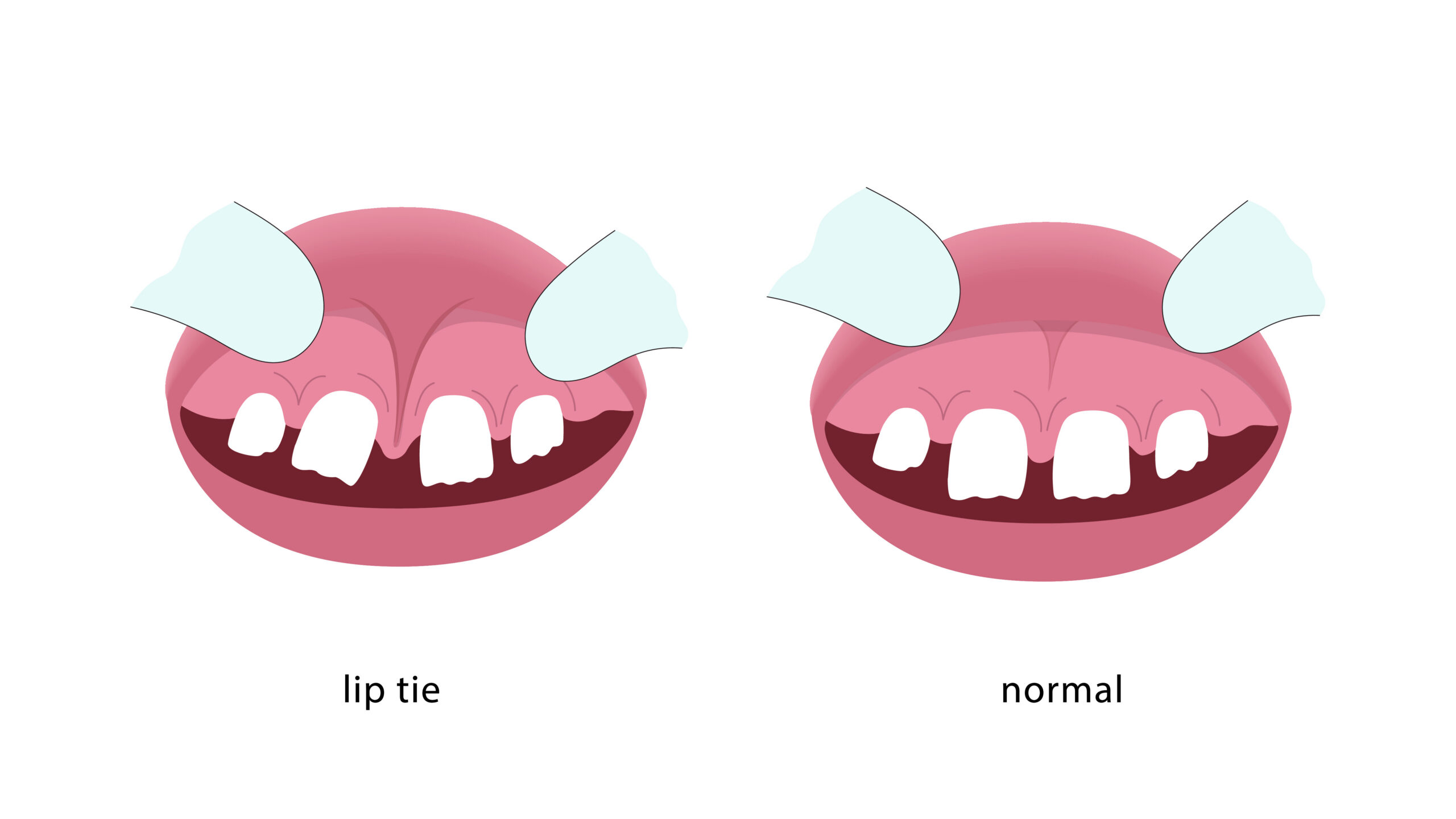
A lip tie occurs when the piece of tissue connecting the upper lip to the gum line, called the labial frenulum, is too short, too thick, or too tightly attached. This limits how far the upper lip can flare outward and move freely. While every infant has a labial frenulum, a restrictive one can interfere with feeding, dental development, and oral function as children grow.
It is important to understand that lip ties exist on a spectrum, and not every tight frenulum causes functional problems or requires intervention. The decision to pursue treatment is always based on whether the tissue is genuinely affecting feeding, weight gain, or development, not appearance alone. That is why a thorough evaluation by a pediatric dentist experienced in oral tissue assessment is always the right first step.
Signs to Watch for in Infants
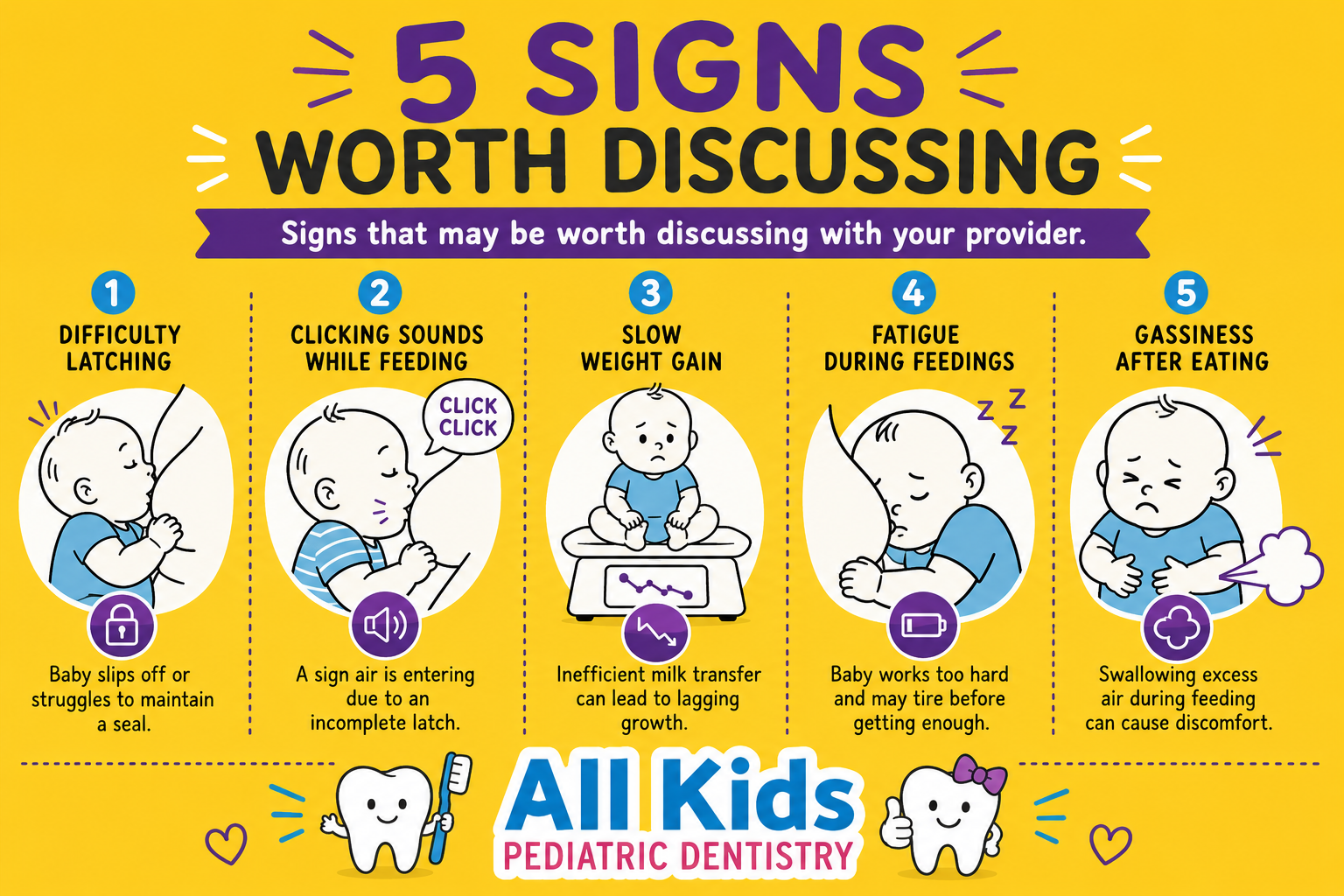
The earliest signs of a lip tie typically appear during breastfeeding. Infants need to flare their upper lip outward to form a proper seal, and a restricted frenulum can make this more difficult. It is worth noting that breastfeeding challenges have many possible causes, and, as HealthyChildren.org from the American Academy of Pediatrics highlights, a coordinated team approach is important when evaluating infants for oral tissue concerns. Signs that may be worth discussing with your provider include the following.
- Difficulty latching: The baby slips off the breast frequently or struggles to maintain a seal.
- Clicking sounds while feeding: A sign air is entering due to an incomplete latch.
- Slow weight gain: When milk transfer is inefficient, growth can lag in ways that need to be addressed.
- Fatigue during feedings: A baby working too hard to feed may tire before getting enough.
- Gassiness after eating: Swallowing excess air during feeding can cause noticeable discomfort.
Any one of these signs on its own may point to something else entirely, but several occurring together are worth bringing to a professional. Functional concerns like poor weight gain and latch difficulty are the considerations that guide our evaluation, not appearance alone.
Signs to Watch for in Toddlers and Older Children
A lip tie does not always make itself known in infancy. Some children reach the toddler years before signs become more apparent, particularly as their dental development progresses. Understanding the difference between a lip tie and tongue tie can also help families arrive at an evaluation with a clearer picture.
A Gap Between the Front Teeth
One of the more visible signs in older children is a persistent gap between the two upper front teeth, called a diastema. When the labial frenulum is thick or extends down between the teeth, it can hold them apart and prevent them from closing naturally. This is not always caused by a lip tie, but it is a pattern worth noting at your child’s next visit.
Difficulty With Lip Movement
Children with a restrictive lip tie may have trouble lifting their upper lip to brush the gum line effectively, which can contribute to plaque buildup near the front teeth. Some parents notice their child’s lip looks tented or pulled when smiling. Our pediatric dental team often catches these subtle presentations during routine infant and toddler dental visits.
How a Lip Tie Is Evaluated and Treated
If you suspect your child may have a lip tie, the first step is a thorough evaluation. Our pediatric doctors assess the frenulum both visually and functionally, considering the full picture of how the tissue is impacting your child’s feeding, growth, and development before recommending any next steps. Treatment decisions are individualized, and we only recommend intervention when there is a meaningful functional reason to do so.
When treatment is indicated, it involves a quick procedure called a frenectomy, which releases the tissue and restores normal movement. Families who want to arrive at their appointment feeling informed can review what parents should know about tongue-tie release procedures ahead of time. When treatment is complete, frenectomy recovery is typically straightforward, and we walk every family through what to expect at every stage.
Connect With All Kids Pediatric Dentistry
If something feels off, trust that instinct and bring it to a pediatric dentist. At All Kids Pediatric Dentistry, our pediatric doctors take every parent’s concern seriously, evaluate each child as an individual, and base every treatment recommendation on functional impact. We welcome patients with virtually all insurance, including SC and NC Medicaid, and a dental savings plan is available for families without coverage. We speak Spanish, Portuguese, and Russian, so every family feels right at home.
We serve families across Charlotte, Plaza Midwood, Southwest Charlotte, and Indian Trail from three convenient locations. Book your appointment online anytime. We look forward to meeting your child and giving you the answers you have been looking for. Give us a call at any of our three locations: Arrowood (980) 263-2330, Plaza Midwood (980) 425-3100, or Indian Trail (704) 684-4451.