One day, your baby is all gums and giggles, and the next, they are drooling, fussing, and chewing on everything they can find. Teething is one of those milestones that catches a lot of parents off guard, not because it is dangerous, but because it can feel relentless. The good news is that most of what your baby goes through during this time is completely normal, and with a little know-how, you can keep them comfortable and their early teeth protected from the very start.
At All Kids Pediatric Dentistry, our team has guided Charlotte-area families through every stage of early childhood dental development since 2014. We take care of children from their very first tooth through their teenage years, and we believe parents who feel informed feel a whole lot more confident. Our six pediatric doctors are passionate about giving families in Charlotte, Plaza Midwood, Southwest Charlotte, and Indian Trail the tools they need to set their little ones up for a lifetime of healthy smiles. Learn more about infant and toddler dental visits and what to expect when you bring your baby in for the first time. All Kids. All Smiles.
What to Expect When Teething Begins
Teething typically starts between six and ten months of age, though some babies begin feeling discomfort even earlier. According to the American Academy of Pediatrics, teething discomfort can begin as early as three months as teeth shift beneath the gums before breaking through. The lower front teeth are usually the first to appear, followed gradually by the upper front teeth and then the molars.
Common signs that your baby is teething include increased drooling, swollen or tender gums, a strong urge to chew on objects, and general fussiness. It is worth noting that fever, diarrhea, and significant crying are not typical teething symptoms. If your baby develops a fever alongside other signs of illness, it is a good idea to check in with your pediatrician to rule out something unrelated.
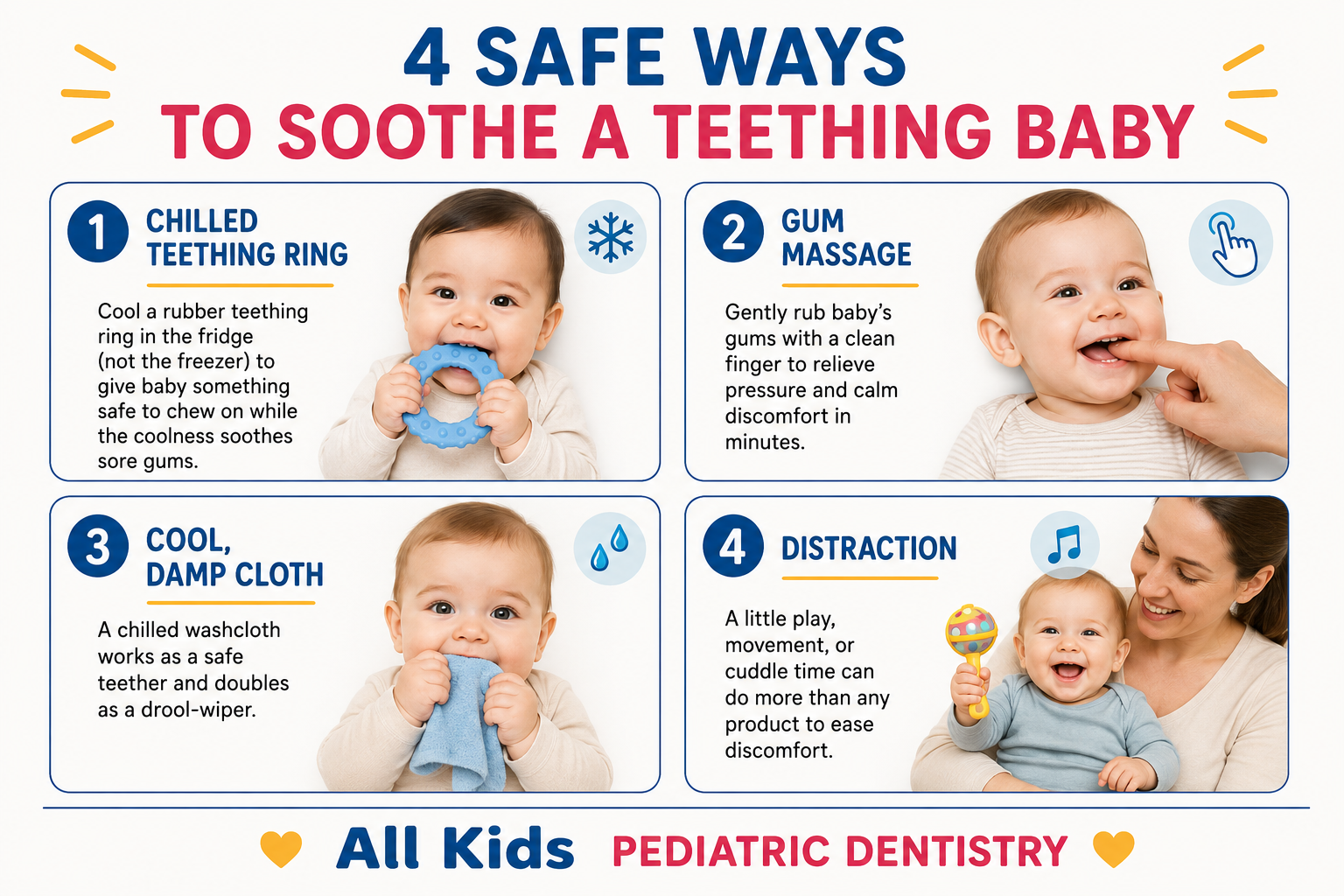
Safe Ways to Soothe a Teething Baby
There are several gentle, effective ways to help your baby through this stage without turning to products that could cause more harm than good. The following approaches are safe, simple, and recommended by pediatric dental professionals:
- Chilled teething rings: A rubber teething ring cooled in the refrigerator (not the freezer) gives your baby something safe to gnaw on while the coolness eases gum soreness.
- Gum massage: Gently rubbing your baby’s gums with a clean finger can relieve pressure and calm discomfort in just a few minutes.
- Cool, damp cloth: A clean washcloth that has been chilled makes a simple, safe teether that also doubles as a drool-wiper.
- Distraction: Sometimes a little play, movement, or cuddle time does more than any product to take your baby’s mind off the discomfort.
Each of these options works by providing gentle counterpressure or cooling relief to tender gums without any risk to your baby’s health. One thing to avoid is over-the-counter numbing gels containing benzocaine. These are not approved by the FDA for children under two and carry real risks, including the potential for serious reactions. Teething necklaces of any kind are also unsafe due to choking and strangulation hazards.
Protecting Those First Teeth From Day One
Teething is the perfect time to start building good oral hygiene habits, because the moment a tooth appears, it can develop cavities. Even before your baby’s first tooth arrives, you can gently wipe their gums with a soft, damp cloth after feedings. Once teeth begin to come in, switch to a soft-bristled infant toothbrush and a tiny smear of fluoride toothpaste, about the size of a grain of rice.
Fluoride treatments are one of the simplest and most effective ways to strengthen early enamel and keep those first teeth protected. Our pediatric dental team applies fluoride varnish during routine visits to give developing teeth an extra layer of defense, especially important during the toddler years when diet and habits are still taking shape.
When to Schedule That First Dental Visit
The American Academy of Pediatric Dentistry recommends that children see a dentist by their first birthday or within six months of the first tooth appearing, whichever comes first. Early visits are less about fixing problems and more about prevention, guidance, and making sure your child grows up feeling comfortable at the dentist. We spend time walking parents through brushing techniques, what to feed and what to limit, and how to watch for early signs of decay.
A first visit also gives our team a chance to check how your baby’s teeth are erupting and flag anything worth monitoring early. You can read more about understanding your child’s tooth eruption timeline to know what to expect in the months and years ahead.
Schedule Your Baby’s First Visit With All Kids Pediatric Dentistry
Watching your baby grow their first teeth is one of those moments worth celebrating, and having the right team beside you makes all the difference. All Kids Pediatric Dentistry serves families across Charlotte and the surrounding communities with warm, welcoming care that puts children first. We accept virtually all insurance, including SC and NC Medicaid, and offer a dental savings plan for families without coverage. We also speak Spanish, Portuguese, and Russian, so every family feels at home from the very first visit. All Kids. All Smiles.
Ready to get started? Our pediatric dental team is here to help your little one build a healthy smile from the very first tooth, and you can book your appointment online to get the process started today. Give us a call at any of our three locations: Arrowood (980) 263-2330, Plaza Midwood (980) 425-3100, or Indian Trail (704) 684-4451.